
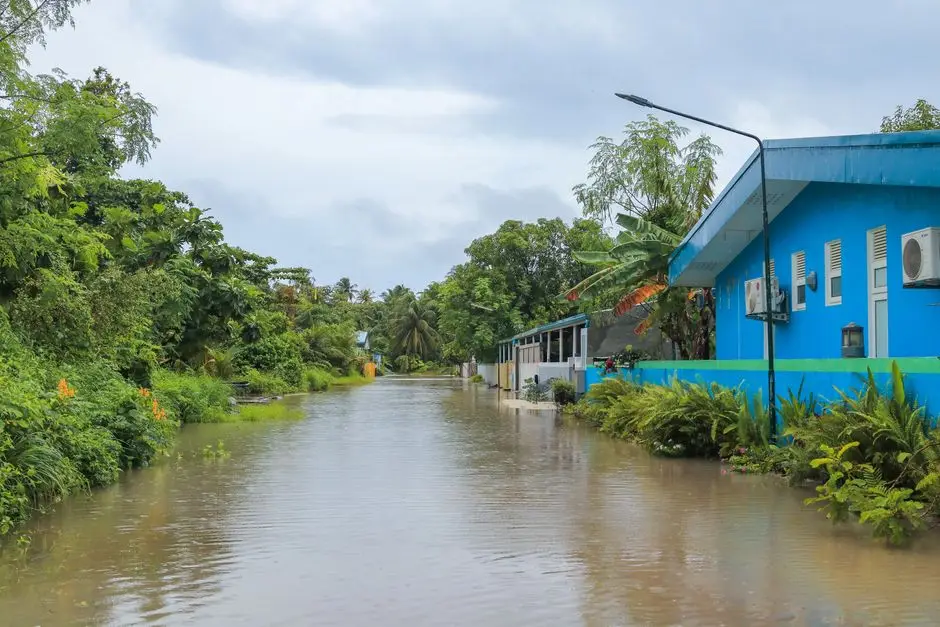
Maryland flood zone rules determine whether you must carry flood insurance, what you can build or renovate, and how much it costs to rebuild after a flood. They are set by FEMA flood maps and enforced locally by each county and municipality, which is why two houses on the same street can face different requirements. This guide breaks down the zone designations, the insurance triggers, the building rules, and how to look up your own address in about five minutes.
What Maryland flood zone rules actually control
Maryland flood zone rules are the combination of FEMA flood insurance rate maps and the local floodplain ordinances that adopt them. They control three things for a homeowner: whether your lender requires flood insurance, what you are allowed to build or improve, and how your property is rated for premiums.
The state sits in a tricky spot geographically. You have tidal flooding along the Chesapeake Bay and its tributaries, riverine flooding from the Potomac and Patapsco, and flash flooding from intense summer storms that overwhelm storm drains in older neighborhoods. That mix is why flood zones in Maryland are not confined to waterfront property. Plenty of inland homes in Baltimore, Columbia, and Silver Spring sit in shaded zones on the current maps.
FEMA revised large portions of the Maryland flood zone map over the past decade, and more revisions are rolling out through 2026. If you bought your house before a map update, the zone printed on your closing documents may no longer be accurate. That is the single most common reason homeowners get surprised by an insurance quote.
How to check your flood zone in Maryland by address
You can check your flood zone in Maryland by address for free through FEMA's Map Service Center or your county's floodplain management office. The FEMA lookup takes about two minutes and gives you the zone letter, the panel number, and the effective date of the map.
- Go to the FEMA Flood Map Service Center and enter your full street address.
- Note the zone designation (A, AE, AO, X, VE, and so on) and the map effective date.
- Cross-check with your county floodplain office, because local panels sometimes carry more current data than the federal viewer.
- Pull your elevation certificate if you have one. It tells you how far your lowest floor sits above the base flood elevation, which drives your premium.
If the lookup shows Zone X but your basement flooded twice in the last three years, trust the water over the map. FEMA maps model a one-percent-annual-chance storm, not the reality of a 1950s storm sewer that backs up every July. We see this constantly in older Baltimore neighborhoods, and it is one reason we handle so much water damage restoration in Baltimore, Maryland after storms that never made the news.
What are the flood zone designations in Maryland?
Flood zone designations in Maryland use the same FEMA letter system as the rest of the country, and the letters tell you two things: the probability of flooding and whether premiums are set by a simple zone rating or a detailed engineering study.
Moderate to low risk: Zone X
Zone X covers areas outside the 500-year floodplain (unshaded X) and areas inside the 500-year floodplain (shaded X). Flood insurance is not required by federally backed lenders here, but roughly 25 percent of all flood claims nationwide come from Zone X properties. Premiums are cheap. Buy the policy anyway.
High risk without detailed study: Zone A
Zone A is the one-percent-annual-chance floodplain with no base flood elevation published. Lenders require insurance. Because there is no BFE, premiums are estimated rather than calculated, and an elevation certificate can bring the number down significantly.
High risk with detailed study: Zone AE
Flood zone AE Maryland requirements are the ones homeowners ask about most. Zone AE has a published base flood elevation, so insurance is rated precisely against your lowest floor. If your lowest floor sits at or above BFE, your premium is a fraction of what a below-BFE neighbor pays. If it sits below, expect a real number.
Coastal high hazard: Zone VE
Zone VE applies to coastal areas with wave action of three feet or more, mostly along the bay and Atlantic shoreline. Construction standards are the strictest in the code, and premiums reflect it.
Do I need flood insurance in a Maryland flood zone?
You need flood insurance in Maryland if you have a federally backed mortgage and your property sits in a high-risk zone (A, AE, AO, or VE). If you own the home outright or your loan is not federally backed, insurance is optional everywhere in the state.
Here is the part most homeowners miss: standard homeowners insurance never covers flood. Not in Zone X, not in Zone AE, not anywhere. A burst supply line is covered. A creek rising into your first floor is not. Those are two different policies, and the gap between them is where most Maryland flood losses land.
Typical 2026 pricing in this area runs roughly $500 to $900 a year for a Zone X policy on a single-family home and $1,800 to $4,500 for a Zone AE home with a below-BFE lowest floor. An elevation certificate costs $400 to $800 and frequently pays for itself in the first renewal. If you are in a high-risk zone and your lender is escrowing, the premium is already baked into your monthly payment, so check your statement before assuming you are uninsured.
Maryland flood insurance requirements also apply to some properties outside high-risk zones if the owner has received federal disaster assistance in the past. That is a separate trigger and worth confirming with your county office.
Maryland floodplain building regulations that affect your renovation
Maryland floodplain regulations kick in the moment your renovation touches more than 50 percent of your home's market value. Cross that threshold and the entire structure has to be brought into compliance with current floodplain standards, not just the part you are remodeling.
This is called the substantial improvement rule, and it catches people off guard during kitchen remodels and second-story additions. In a Zone AE, compliance usually means elevating the lowest floor to or above base flood elevation, which can mean lifting the house. In practice, most homeowners stay under the 50 percent line deliberately, and counties track permit values closely to enforce it.
Other rules that apply inside the floodplain:
- Enclosed areas below base flood elevation must have flood openings (vents) sized to equal at least one square inch per square foot of enclosed space.
- Mechanical equipment, including furnaces and water heaters, must be elevated or protected.
- New construction in Zone VE must be elevated on pilings or columns, with the area below left open.
- Fill is restricted in the floodway, the channel-adjacent portion of the floodplain where water actually flows during a flood.
If you are renovating a lower level in a floodplain, the drying and moisture work matters as much as the framing. We handle a lot of basement water extraction Maryland in homes where a finished lower level was built without flood openings and trapped water against the foundation for weeks.
Common mistakes homeowners make with flood zone rules
The most expensive mistake is assuming the zone on your closing paperwork is still current. FEMA remaps, counties adopt new panels, and your zone can change without anyone notifying you directly.
Other mistakes we see regularly:
- Skipping insurance in Zone X. Roughly a quarter of all flood claims come from moderate-risk zones, and those homeowners have no coverage.
- Filing a flood claim on homeowners insurance. It will be denied. Flood is a separate policy, and the denial stays on your record.
- Starting a renovation without checking the substantial improvement threshold. A $60,000 kitchen in a $250,000 house crosses the 50 percent line and triggers full compliance.
- Ignoring the floodway. If any part of your lot sits in the floodway, your buildable area shrinks dramatically and permits get much harder.
- Waiting until after the storm to buy coverage. NFIP policies carry a 30-day waiting period. There is no retroactive coverage.
One more: homeowners sometimes assume a sump pump and a French drain solve a flood zone problem. They help with groundwater. They do nothing for a creek that rises six feet, and they fail completely during a power outage unless you have battery backup.
When to call a professional
Call a professional the moment water enters your home, regardless of what zone you are in. Floodwater is contaminated, it wicks into drywall and insulation within hours, and mold can start colonizing wet framing in 24 to 48 hours.
Our team handles the full sequence: emergency extraction, structural drying with commercial dehumidifiers and air movers, antimicrobial treatment, and documentation you can hand to your insurance adjuster. We work in high-risk zones and Zone X alike, because water does not read the map. If you are dealing with a flooded lower level, we also handle crawl space water extraction Maryland and can tell you whether the moisture is coming from the flood event or a long-term drainage problem.
For storm-driven flooding, we bring generators and truck-mounted extraction so we are not dependent on your home's power. For sewage-contaminated floodwater, which is common when municipal systems surcharge during heavy rain, the cleanup is a different category of work entirely and needs proper disinfection.
Frequently Asked Questions
What are the flood zone rules in Maryland?
Maryland adopts FEMA flood maps and enforces them through county floodplain ordinances. The rules require flood insurance for federally backed mortgages in high-risk zones (A, AE, AO, VE), restrict construction and substantial improvements in the floodplain, and require flood openings and elevated mechanicals in compliant structures.
Do I need flood insurance in a Maryland flood zone?
If your property is in Zone A, AE, AO, or VE and you have a federally backed mortgage, yes. In Zone X, insurance is optional but recommended, since about 25 percent of flood claims come from moderate-risk zones. NFIP policies have a 30-day waiting period, so do not wait for a storm forecast.
How do I check my flood zone in Maryland?
Enter your address in FEMA's Flood Map Service Center for the zone letter and map date, then confirm with your county floodplain office. The whole process takes about five minutes. If you have an elevation certificate, pull it, because it determines your actual premium in Zone AE.
What is flood zone AE in Maryland?
Zone AE is the one-percent-annual-chance floodplain with a published base flood elevation. Insurance is required with a federally backed loan, and premiums are rated against how far your lowest floor sits above or below that elevation. An elevation certificate can cut premiums by hundreds of dollars a year.
Who can help with flood zone water damage in Maryland?
Water Damage Pros Maryland handles emergency extraction, structural drying, mold remediation, and insurance documentation for flood losses across the state. We respond 24/7 and work directly with adjusters so you are not managing the paperwork alone while your house is wet.
Get help with Water Damage in Maryland
Whether you are in a high-risk flood zone or a shaded Zone X that floods anyway, standing water needs to come out today, not next week. We handle extraction, drying, and documentation from the first call through the final moisture reading.
Call Water Damage Pros Maryland at (855) 713-4896 for 24/7 emergency response anywhere in the state.