
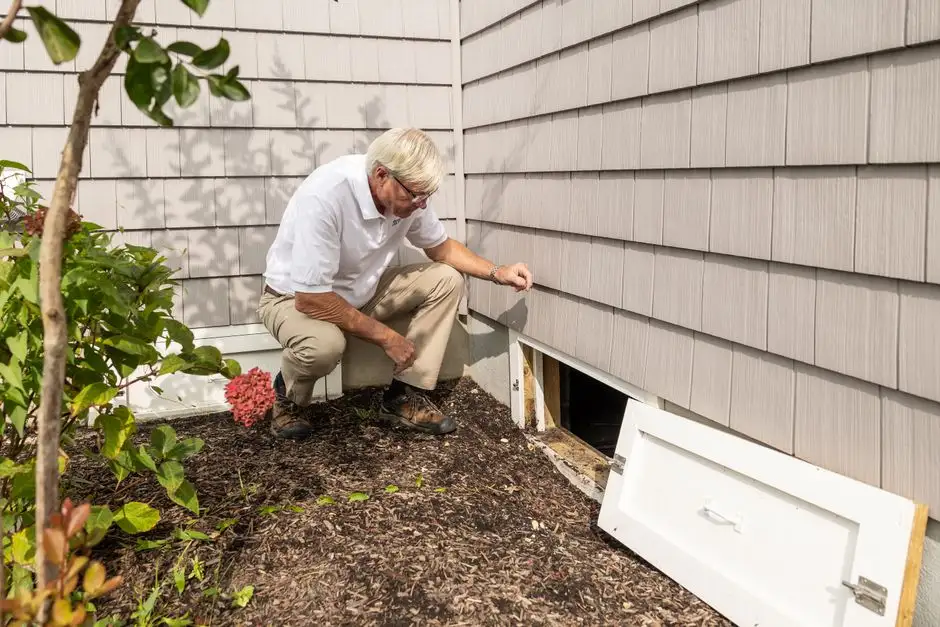
Your crawl space keeps flooding in Maryland because the state's clay-heavy soil, high water table, and 40 to 45 inches of annual rainfall push groundwater against your foundation faster than it can drain away. That water finds the path of least resistance - a hairline crack, a missing vapor barrier, a clogged French drain - and pools under your house. This article breaks down the six causes we see most often, what it costs to fix them in 2026, and when it's time to stop patching and call in a crew.
The Short Answer: Why Maryland Crawl Spaces Flood
Crawl space flooding in Maryland is a drainage problem, not a plumbing problem - most of the time. The ground around your foundation becomes saturated during a storm, and the water has nowhere to go but in. Maryland's soil is the main culprit: much of the state sits on silt loam and clay that absorbs water slowly. When the ground can't take any more, hydrostatic pressure builds against your foundation walls and pushes water through the smallest opening.
Add a water table that sits high in low-lying areas like Water Damage in Glen Burnie and near the Chesapeake Bay, and you have a crawl space that floods every time it rains hard. It's not bad luck. It's physics.
The 6 Most Common Causes of Crawl Space Flooding in Maryland
After thousands of crawl space inspections across Maryland, we see the same six problems over and over. Fixing the right one is the difference between a dry crawl space and a recurring nightmare.
1. Poor Grading and Negative Slope
If the ground around your foundation slopes toward the house instead of away from it, every rainstorm sends water directly to your crawl space. Maryland's freeze-thaw cycles shift soil over time, and what was once a proper slope can flatten or reverse within a few years. We recommend a minimum 6-inch drop over the first 10 feet from the foundation.
2. Clogged or Missing Foundation Drains
Many older Maryland homes have perimeter drains - French drains or footing drains - that were installed decades ago. These clog with silt, roots, and debris. Once they stop flowing, water backs up against the foundation and seeps through. A drain that hasn't been cleaned in 10 years is essentially a buried pipe full of mud.
3. Failed or Missing Vapor Barrier
A vapor barrier (usually 6-mil or 10-mil polyethylene) covers the crawl space floor and stops ground moisture from evaporating into the space. When it's torn, missing, or laid incorrectly, moisture rises continuously. This doesn't cause standing water on its own, but it keeps the space at 80-90% relative humidity - perfect conditions for mold and wood rot.
4. Downspouts Dumping Too Close to the Foundation
One downspout discharging 2 feet from the house can dump 500 gallons of water during a 1-inch rainstorm right at your foundation. We see this constantly in Water Damage in Columbia and other planned communities where builders put downspouts in inconvenient spots. Extending them 6 to 10 feet away from the foundation is one of the cheapest fixes you can make.
5. High Water Table
In low-lying parts of Maryland - near the Patuxent, Potomac, and Chesapeake - the water table can sit just 12 to 18 inches below the crawl space floor. During wet seasons, it rises above the floor level and water simply appears. No amount of grading fixes a high water table. You need a sump pump and a drainage system designed for it.
6. Foundation Cracks and Unsealed Penetrations
Concrete block foundations - common in Maryland homes built before 1980 - crack along mortar joints. Utility penetrations for plumbing, electrical, and HVAC lines are often unsealed. Water under pressure finds these openings. A crack the width of a credit card can let in 50 to 100 gallons per day during wet weather.
Why Does My Crawl Space Flood After Heavy Rain in Maryland?
Heavy rain overwhelms the soil's ability to absorb water, and the excess has to go somewhere. In Maryland, that somewhere is often your crawl space. The sequence is predictable: rain saturates the topsoil, water percolates down to the water table, the water table rises, and hydrostatic pressure pushes water through your foundation.
Maryland gets 40 to 45 inches of rain per year, but it doesn't fall evenly. A single summer thunderstorm can drop 2 to 3 inches in an hour. The ground can't absorb that fast. If your gutters overflow, your grading is flat, and your foundation drain is clogged, that water ends up under your house.
Hurricane season (June through November) and the spring thaw are the two peak periods for crawl space flooding in Maryland. If your crawl space floods every time we get a 2-inch rain, the problem isn't the rain - it's the drainage.
How to Stop Crawl Space Flooding in Maryland
Stopping crawl space flooding in Maryland means addressing water before it reaches the foundation, not just pumping it out after. Here's the order we recommend, from cheapest to most involved.
Step 1: Fix the Grading and Downspouts
Add soil to create a 6-inch slope away from the foundation over 10 feet. Extend every downspout at least 6 feet from the house. This alone solves 20-30% of the crawl space flooding cases we see.
Step 2: Clean or Replace Foundation Drains
If you have perimeter drains, have them jetted and inspected. If they're crushed or collapsed, replacement is the only option. A new French drain with a proper gravel envelope and filter fabric costs $3,000 to $8,000 in Maryland in 2026, depending on linear footage and access.
Step 3: Install a Crawl Space Sump Pump
A sump pit and pump at the low point of the crawl space moves water out before it rises. We install pumps with battery backup because Maryland's worst storms often knock out power. A quality sump system runs $1,200 to $2,500 installed.
Step 4: Encapsulate the Crawl Space
Encapsulation seals the entire crawl space - floor, walls, and vents - with a heavy-duty vapor barrier. It stops moisture migration, reduces humidity, and makes the space part of your conditioned envelope. Crawl space encapsulation in Maryland costs $5,000 to $15,000 depending on square footage and whether you need a dehumidifier. It's the single most effective long-term fix for wet crawl spaces.
Step 5: Seal Foundation Cracks and Penetrations
Inject cracks with polyurethane or epoxy and seal all utility penetrations with hydraulic cement or expanding foam. This is inexpensive ($500 to $1,500) and closes the paths water uses to get in.
Crawl Space Flooding and Mold in Maryland
Mold starts growing in a wet crawl space within 24 to 48 hours. Maryland's humid summers make it worse - once mold establishes, it spreads through the floor joists and subfloor above. By the time you smell that musty odor in your living room, the mold has been growing for weeks.
The health effects are real: respiratory irritation, allergies, and asthma triggers. The structural effects are worse. Wood rot weakens floor joists, and mold eats away at the subfloor. We've seen floor sag in Maryland homes that had a wet crawl space for less than two years.
If your crawl space has flooded and stayed wet for more than a day, assume mold is present. Professional Mold Remediation in Maryland involves containing the space, removing contaminated materials, and treating the structure - not just spraying bleach.
Common Mistakes Maryland Homeowners Make
The mistakes we see most often turn a $2,000 fix into a $15,000 problem. Avoid these:
- Pumping water out and doing nothing else. The water comes back with the next storm because the cause is still there.
- Running a household dehumidifier in the crawl space. It can't keep up with a wet crawl space and often freezes in winter.
- Sealing vents without encapsulating. This traps moisture inside and makes mold worse.
- Using bleach on mold. Bleach kills surface mold but doesn't penetrate wood or block regrowth.
- Ignoring the problem until you smell it. By then, mold and rot have been spreading for weeks.
When to Call a Professional
Call a professional when water returns after you've fixed grading and downspouts, when you see mold or smell musty air, or when your crawl space floods more than once a year. Those are signs the problem is structural or hydrostatic - not something a weekend of digging will solve.
Our team at Water Damage Pros Maryland handles crawl space water removal, structural drying, mold remediation, and encapsulation across the state. We find the source, fix it, and verify the space is dry before we leave. If you're dealing with recurring flooding, Crawl Space Water Removal in Maryland is where we start - we extract standing water, dry the structure, and then address the cause so it doesn't happen again.
Frequently Asked Questions
Why does my crawl space keep flooding in Maryland?
Maryland's clay soil, high water table, and 40+ inches of annual rain push groundwater against your foundation faster than it can drain. Poor grading, clogged foundation drains, and failed vapor barriers make it worse. Fixing the drainage - not just pumping water - is the only permanent solution.
How do I stop my crawl space from flooding in Maryland?
Start with grading and downspout extensions, then clean or replace foundation drains, install a sump pump, and encapsulate the space. Encapsulation costs $5,000 to $15,000 in Maryland and is the most effective long-term fix. Most homes need two or three of these steps together.
Does insurance cover crawl space flooding in Maryland?
Standard homeowners insurance usually covers sudden, accidental water damage - like a burst pipe - but not flooding from groundwater, surface water, or poor drainage. You need a separate flood policy through NFIP or a private insurer for that. Check your policy's water damage exclusions before you file a claim.
How much does crawl space water removal cost in Maryland?
Emergency crawl space water removal in Maryland runs $500 to $2,500 depending on water volume and accessibility. Structural drying adds $1,000 to $3,000. If mold is present, remediation adds $1,500 to $6,000. Encapsulation to prevent recurrence costs $5,000 to $15,000.
Who do I call for a flooded crawl space in Maryland?
Call a water damage restoration company that handles crawl spaces specifically - not a general handyman. You want a crew that can extract water, dry the structure, treat mold, and fix the drainage cause. Water Damage Pros Maryland handles all of it. Call (855) 713-4896.
Get Help with Water Damage in Maryland
A flooded crawl space doesn't fix itself, and every day it stays wet, the damage gets more expensive. We handle crawl space water removal, drying, mold remediation, and encapsulation across Maryland - and we'll tell you exactly what it costs before we start.
Call Water Damage Pros Maryland at (855) 713-4896. We'll get your crawl space dry and keep it that way.