
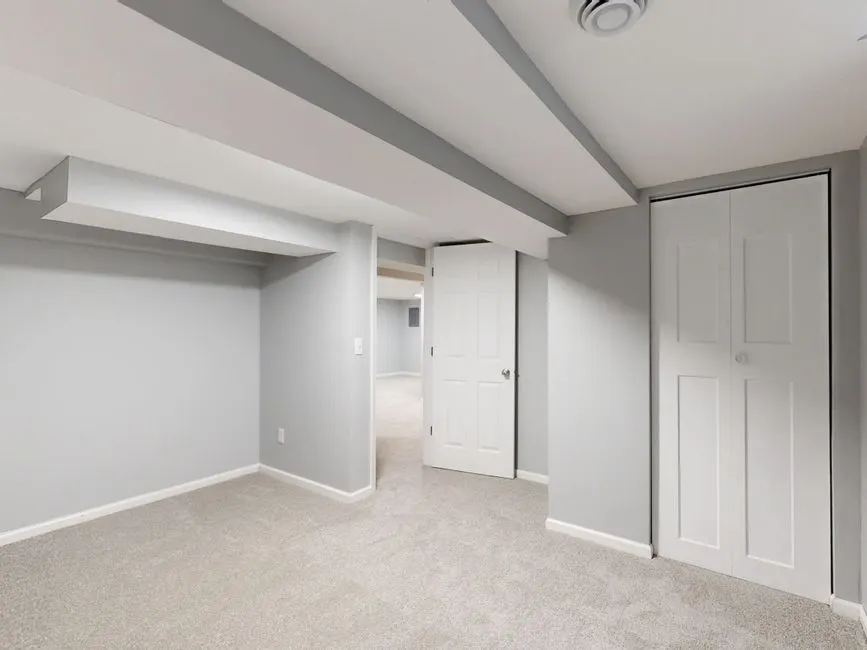
Your basement is leaking because water is finding a path through your foundation, floor-wall joint, or drainage system - and in Maryland, that path is usually opened by hydrostatic pressure from saturated clay soil, a failed sump pump, or a cracked footing drain. The leak is a symptom, not the problem itself. The rest of this post walks through the specific causes we see across Maryland, how to tell them apart, what repairs cost in 2026, and when it is time to bring in a professional.
Why is my basement leaking water in Maryland?
Basement leaking water in Maryland is groundwater intrusion that happens when the soil around your foundation holds more water than it can drain away. Maryland sits on a mix of clay, silt, and loam - and clay is the culprit. It absorbs water slowly and releases it even more slowly, so after a storm the ground stays saturated for days. That water has to go somewhere, and it pushes against your foundation walls and floor.
Once the pressure is high enough, water enters through the easiest available opening: a hairline crack in the poured wall, a gap at the floor-wall joint, a deteriorated block mortar joint, or a failed window well. This is why a basement that was bone-dry for years suddenly leaks after one heavy storm. The opening was always there - the pressure just finally found it.
The most common causes of basement leaks in Maryland
Maryland basement leak causes fall into three buckets: water getting in from outside, water not draining away, and water being pushed up from below. Most homes have more than one working at the same time.
1. Hydrostatic pressure and clay soil
When the ground around your foundation is saturated, water exerts pressure against the walls and floor. In Maryland's clay-heavy areas - think parts of Baltimore County, Howard County, and the older neighborhoods in Silver Spring - that pressure can reach several hundred pounds per square foot during a wet spring. The water does not need a visible crack. It can move through the concrete itself if the wall is old or poorly sealed.
2. Floor-wall joint seepage
The joint where the basement floor meets the wall is the single most common leak point we see. It is not a structural seam - it is a cold joint poured at different times, and it moves slightly with temperature and soil movement. Water pools at the base of the wall and seeps through the gap. If you see a dark stain or white efflorescence along the bottom of the wall, that is the signature.
3. Cracked or clogged footing drains
Footing drains (also called perimeter drains) collect water at the base of the foundation and carry it away. In homes built before 1980, these are often clay tile that has cracked, shifted, or filled with roots. When the drain fails, water has nowhere to go but up through the floor. This is one of the most common causes of basement leaks in Maryland in older neighborhoods like Towson, Ellicott City, and Glen Burnie.
4. Sump pump failure
A sump pump is your basement's last line of defense. When it fails - power outage, stuck float, burned-out motor, or a discharge line that froze - water backs up fast. We see this constantly after summer thunderstorms and during the January thaw. If your pump runs constantly or cycles every few minutes, it is already telling you the drainage system is overwhelmed.
5. Window wells and grading
Window wells without covers fill with leaves and debris, then overflow into the basement. And if the ground around your foundation slopes toward the house instead of away, every rainstorm sends water directly to the wall. A 6-inch drop over the first 10 feet is the minimum you want. Many Maryland yards fail that test after years of settling.
Why is my basement leaking after heavy rain in Maryland?
Heavy rain in Maryland overwhelms the soil's ability to absorb water, so the water table rises and pushes against your foundation from all sides. The leak shows up during or within 24 hours of the storm, and it usually appears at the floor-wall joint or through the cove base. If your basement only leaks after big storms, the problem is almost always surface water management - grading, gutters, downspouts, or a failed footing drain.
Start with the cheap fixes. Clean your gutters. Extend downspouts at least 6 feet from the foundation. Check that the ground slopes away. If those are handled and you still get water, the issue is below grade and needs a drainage or waterproofing solution.
Why does my basement leak in Maryland winter?
Winter leaks in Maryland come from freeze-thaw cycles, not from rain. Water in the soil freezes, expands, and pushes against your foundation. When it thaws, it leaves gaps and cracks that were not there before. The cycle repeats all season, and by February you have a leak that did not exist in October.
Ice dams and frozen discharge lines make it worse. If your sump pump discharge line freezes solid, the pump runs but cannot move water - and the water goes into your basement instead. We recommend a freeze-resistant discharge line or a slight slope that lets the line drain completely after each cycle.
How to stop basement water seepage in Maryland
Stopping basement water seepage in Maryland means addressing the water before it reaches your foundation, then sealing the paths it has already found. The order matters. Sealing a crack without fixing the drainage is like patching a tire without fixing the nail.
Here is the sequence we follow on almost every job:
- Manage surface water first. Clean gutters, extend downspouts, regrade the soil, and cover window wells. This alone solves a surprising number of leaks.
- Test the sump pump. Pour a bucket of water into the pit and confirm the pump kicks on and discharges fully. If it hesitates, replace it before the next storm.
- Seal the floor-wall joint and cracks. We use hydraulic cement and polyurethane injection for active leaks, then a flexible sealant for the joint. This stops the water that is already getting in.
- Install or repair interior drainage. A perimeter drain system inside the basement captures water at the footing and routes it to the sump pit. This is the most reliable fix for hydrostatic pressure.
- Consider exterior waterproofing. If the foundation is exposed during a remodel or the leak is severe, exterior membrane and drainage board are the long-term answer.
If you are dealing with standing water rather than a slow seep, our Basement Water Removal in Maryland team can pump it out and dry the space before mold sets in. For leaks that have already soaked drywall or carpet, Water Damage Restoration in Maryland covers the full dry-out and repair.
What to watch out for
Not every basement leak is a simple crack. Some are warning signs of a bigger problem, and some "fixes" make things worse.
- White powder on the walls (efflorescence). This is mineral residue left by water moving through concrete. It means water is actively passing through the wall, even if you do not see a drip.
- Musty smell but no visible water. That is mold growing in the carpet, drywall, or insulation. By the time you smell it, the moisture has been there for weeks.
- Bowing or leaning walls. This is structural. Hydrostatic pressure has pushed the wall past its limit. Do not just seal it - get it evaluated.
- Water coming up through the floor. This is almost always a failed footing drain or a rising water table. Surface sealing will not fix it.
- DIY hydraulic cement on an active leak. It can work temporarily, but if the water pressure is high, it will blow out. We see this a lot.
If you are in an older neighborhood - say, a 1920s rowhouse in Water Damage in Baltimore or a 1960s split-level in Glen Burnie - expect the leak to be a combination of failed original waterproofing and settled grading. Those homes were not built with modern drainage.
When to call a professional
Call a professional when the leak is active, when water is coming up through the floor, when you see bowing walls, or when you have already tried the surface fixes and the water keeps coming back. A slow seep that only appears after a storm can often be managed with grading and downspouts. A leak that runs during every rain, or that appears in dry weather, needs a professional assessment.
We handle basement leak repair in Maryland every week - from simple crack injection to full interior drainage systems. Our team finds the source, fixes it, and tests the repair before we leave. If you are not sure whether your leak is serious, we will tell you honestly. Sometimes the answer is a $200 downspout extension, not a $6,000 drainage system.
For homeowners across the state, we offer Water Damage in Maryland services that cover everything from emergency extraction to structural drying and mold remediation. If your leak has already caused damage, we can handle the whole job.
Frequently Asked Questions
Why is my basement leaking water in Maryland?
Your basement is leaking because groundwater is under pressure from saturated clay soil and is entering through a crack, the floor-wall joint, or a failed footing drain. Maryland's clay-heavy soil and freeze-thaw winters make this common. The fix depends on whether the water is coming from outside, below, or both.
How do I stop my basement from leaking in Maryland?
Start with surface water: clean gutters, extend downspouts 6 feet, regrade soil to slope away, and cover window wells. If the leak continues, seal the floor-wall joint and cracks, then install interior drainage to a sump pump. Most Maryland homes need a combination of these.
Does homeowners insurance cover basement leaks in Maryland?
Usually not. Standard Maryland homeowners policies exclude water damage from groundwater, seepage, and hydrostatic pressure. They may cover a sudden burst pipe or appliance failure. Check your policy - some insurers offer a basement water backup endorsement for an extra premium.
How much does basement leak repair cost in Maryland?
Typical 2026 pricing in Maryland runs $300 to $800 for crack injection, $1,500 to $4,000 for interior drainage and a sump system, and $8,000 to $15,000 for full exterior waterproofing. The exact cost depends on the leak source, access, and whether the wall is poured concrete or block.
Who do I call for a leaking basement in Maryland?
Call a licensed basement waterproofing or water damage restoration company. We handle both the leak repair and any water damage cleanup. If there is standing water, call immediately - mold can start growing within 24 to 48 hours. We serve Baltimore, Columbia, Silver Spring, and surrounding areas.
Get help with Water Damage in Maryland
A leaking basement does not fix itself, and every day you wait gives mold more time to grow. We find the source, stop the water, and dry the space - usually in one visit. Call Water Damage Pros Maryland at (855) 713-4896 and we will get your basement dry.